
Belt Conveyor
Continuous transfer between crushing, screening and stockpiling stages. Belt width, speed and structure are reviewed for the material and site layout.
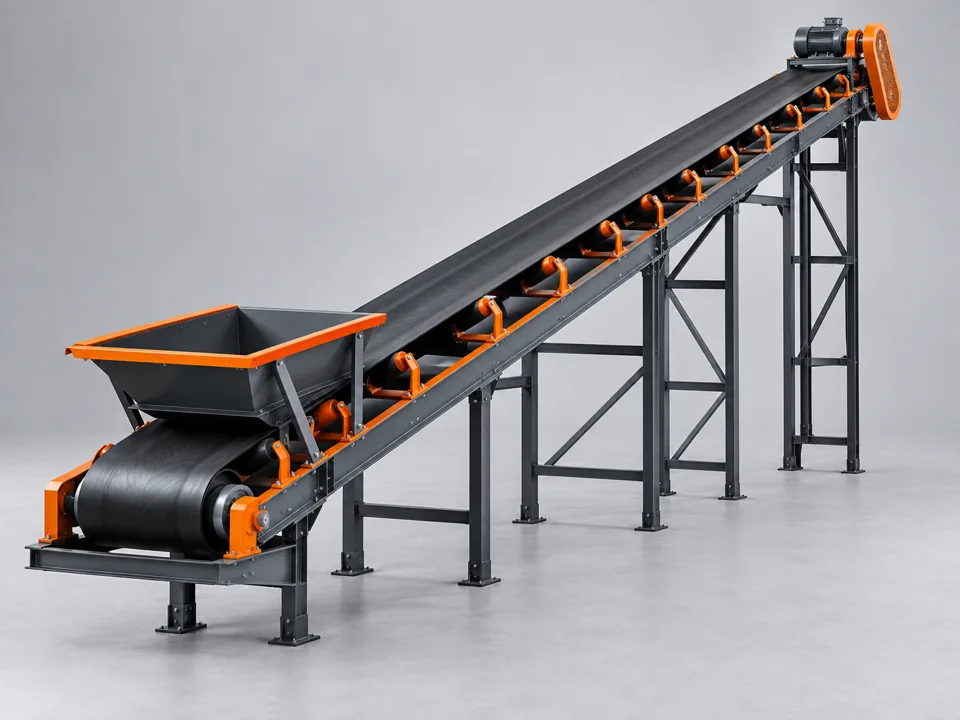
Configured around the actual process duty
The Belt Conveyor is selected from confirmed material, feed, capacity, product and site information. Its duty is reviewed together with upstream feeding, downstream transfer, classification, utilities, maintenance access and the agreed operating schedule.
Suitable feed
Crushed rock, aggregate, ore and other bulk solids suitable for belt transport.
Process position
Connects process equipment and transfers products or intermediate material.
Engineering focus
Capacity, belt width and speed, lift, transfer points, idlers, drive location, guarding and support structure.
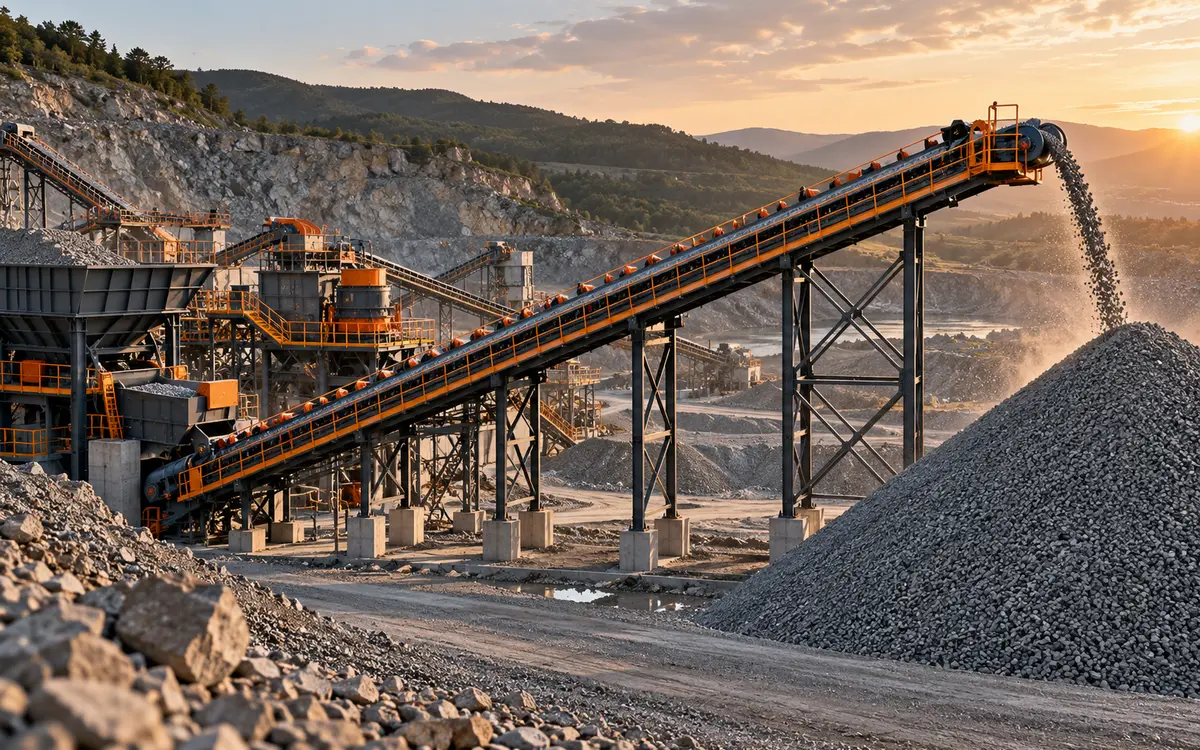
Continuous belt transport
A driven belt carries material over supported idlers between loading and discharge points. Stable operation depends on controlled loading, tracking and clean transfer design.
Stable performance depends on controlled feed, correct operating settings, suitable wear or process components and effective coordination with the surrounding plant.
- Application reviewed from confirmed material and duty data
- Operating configuration matched to the required process result
- Wear, maintenance and access requirements considered during selection
- Upstream and downstream equipment reviewed as one process
Information required before model confirmation
Catalogue ranges support early planning. Final capacity and equipment selection require confirmed project data.
| Review item | Information to provide | Engineering impact |
|---|---|---|
| Material properties | Material name, hardness or strength, abrasiveness, moisture and contamination. | Equipment suitability, wear selection and power demand. |
| Feed conditions | Maximum size, typical grading, feed rate and feeding method. | Inlet, loading pattern and upstream configuration. |
| Required duty | Target capacity, operating hours and expected availability. | Equipment size, drive duty and complete circuit capacity. |
| Required product | Target result, discharge specification and downstream process. | Operating configuration and downstream arrangement. |
| Site conditions | Country, altitude, power standard, utilities, installation and layout constraints. | Motor, controls, structure, access and delivery documentation. |
Coordinate the equipment with the complete duty
Core equipment review
- Model and process configuration
- Drive arrangement, controls and guarding
- Process and wear components for the application
- Base arrangement and agreed equipment documentation
Optional project coordination
- Feeding, conveying, classification and auxiliary equipment
- Chutes, structures and process-layout communication
- Spare and wear-parts recommendation
- Inspection, delivery and commissioning support scope
Common selection questions
What information is needed to select this equipment?
Share material bulk density, lump size, required flow rate, transfer distance, lift, route and site layout.
Does the published capacity guarantee site performance?
Belt capacity depends on belt width and speed, loading geometry, incline and material behavior; the selected route must also be checked for spillage and maintenance access.
How are belt width and drive selected?
They are reviewed against the required flow, material characteristics, incline and starting conditions; final drive and take-up details are confirmed in the technical proposal.
Can conveyors connect to an existing plant?
Yes. Share the loading and discharge points, elevations, available space and existing equipment interfaces for a layout review.
Which conveyor parts should be planned as spares?
Belts, rollers, scrapers and other service items can be identified against the selected conveyor specification and operating duty.
Request a Belt Conveyor proposal
Send the material, feed condition, target capacity, required product, project country and preferred contact method.
Email: sales@langbomachine.com
WhatsApp: +86 155 1713 3739
- Material and maximum feed size
- Target capacity and output sizes
- Project country and delivery scope