How to Choose the Right Crusher for Hard Rock
- Start with rock hardness, abrasiveness, moisture and maximum lump size.
- Define capacity for the complete circuit, not one crusher in isolation.
- Match each crushing stage to the required finished product.
- Confirm site access, power, dust control and maintenance conditions.
Selecting a crusher begins with the rock and the required product—not with a catalogue model. Two sites with the same target capacity can need different machines because feed size, abrasiveness, moisture, product shape and operating conditions are different.
1. Define the Feed Material
Start with rock type, compressive strength, abrasiveness, clay content and moisture. Hard, abrasive material usually requires wear-resistant crushing principles and careful control of reduction ratio. Sticky or clay-rich feed may need scalping, washing or a different feeding arrangement before the main crusher.
2. Confirm Maximum Feed Size
The maximum lump size—not only the average size—determines the required feed opening. Oversized rocks can bridge the inlet, interrupt production and create unsafe manual clearing work. The feeding equipment and crusher opening should therefore be evaluated as one system.
3. Set Capacity and Product Targets
State the required tonnes per hour, operating hours, finished sizes and intended use. Road base, concrete aggregate, manufactured sand and mineral preparation have different grading and shape requirements. Capacity should be defined for the complete circuit rather than for an isolated crusher.
4. Match the Crusher to the Process Stage
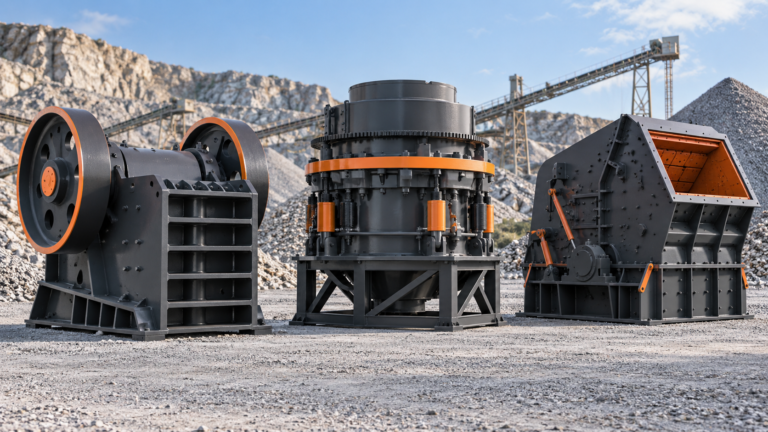
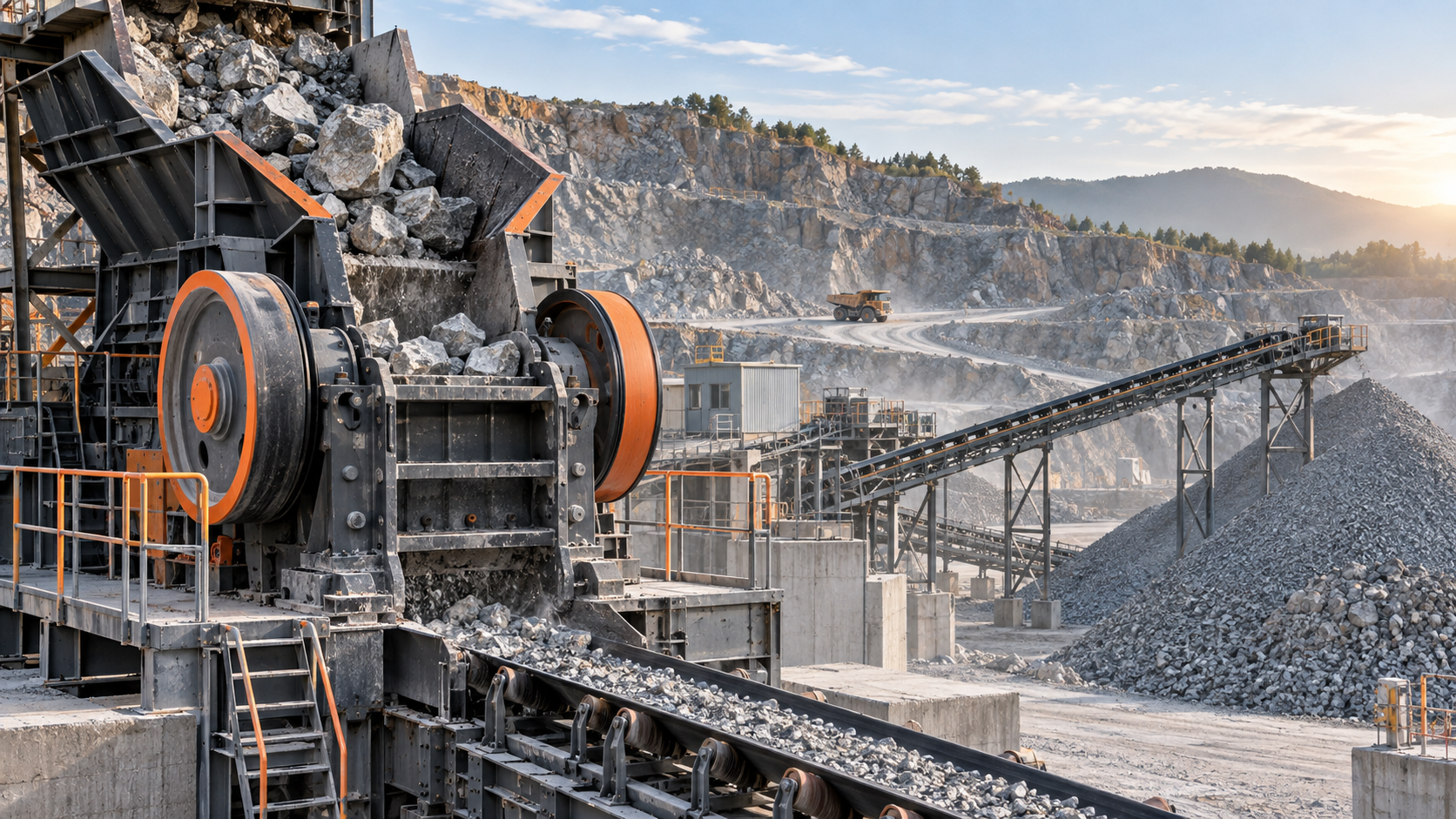
- Jaw crusher: commonly used for primary crushing and large feed.
- Cone crusher: often selected for secondary or tertiary crushing of hard and abrasive rock.
- Impact crusher: useful where product shape and a high reduction ratio are important, depending on wear conditions.
- VSI sand maker: applied for shaping and manufactured-sand duties after upstream crushing.
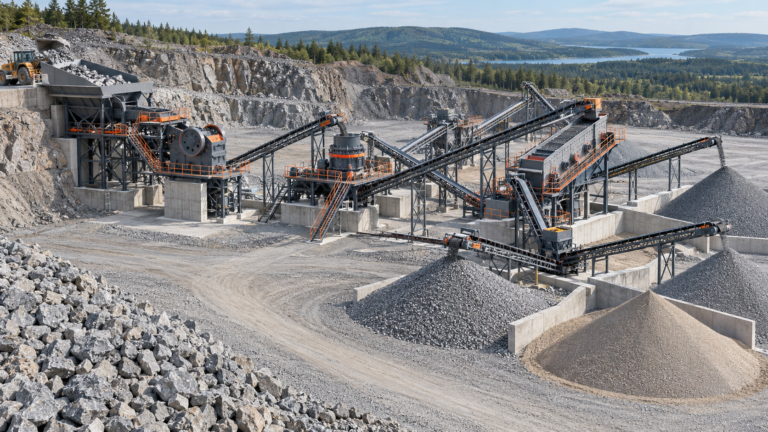
5. Evaluate the Whole Circuit
A crusher cannot be selected independently from the feeder, screens, conveyors, stockpiles and recirculating load. Screen efficiency and closed-circuit return can materially change actual crusher duty. A balanced process reduces bottlenecks and unnecessary wear.
6. Consider Site and Maintenance Conditions
Available power, installation space, transport limits, climate, dust control, lifting access and local maintenance capability all influence the final configuration. Mobile equipment may suit temporary or changing work faces, while stationary plants may better support long-term, high-utilization production.
Information to Send a Supplier
- Material or ore name and available test information.
- Maximum and typical feed size.
- Required hourly capacity.
- Final product sizes and application.
- Project country, site conditions and power supply.
- Photos, drawings or an existing process flow.
HNLANGBO uses these inputs to discuss a practical process route and compatible equipment. For a focused review, send your project requirements to our sales and engineering team.
Technical Decision Table
| Project input | Why it matters | Selection consequence |
|---|---|---|
| Hardness and abrasiveness | Influence crushing principle and wear rate | Compression crushing is often preferred for hard abrasive rock |
| Maximum feed size | Controls feed opening and primary duty | Evaluate feeder and crusher inlet together |
| Finished product | Defines reduction, screening and shape requirements | May require closed circuit and additional shaping |
| Mobility and site life | Affects foundations and relocation | Helps compare stationary, modular and mobile formats |
Final equipment selection should be based on confirmed material data, site conditions and the agreed technical scope.
Frequently Asked Questions
Is a jaw crusher always required for hard rock?
Not always. The correct primary stage depends on feed size, reduction, capacity and the complete flowsheet.
Should crusher capacity equal target plant capacity?
Crusher sizing must account for screen efficiency, recirculating load, interruptions and operating hours.
What data is needed first?
Rock type, top feed size, grading, moisture, capacity, finished sizes, location and power provide a useful starting point.
Discuss Your Project Requirements
Send the material, feed size, target capacity, required products and site information for a practical equipment review.
Request a Project Proposal