Aggregate Crushing Plant Design: Information You Need
- Describe the feed before selecting equipment.
- Separate nominal equipment capacity from required plant output.
- Define each finished-product size and expected proportion.
- Confirm site, utilities, civil works and supply boundaries.
A reliable aggregate plant starts with clear design inputs. Capacity alone is not enough. The same 200-tonne-per-hour target can lead to different flowsheets depending on feed gradation, rock strength, final products, site layout and operating schedule.
Material Information
Identify the rock or recycled material, maximum lump size, typical gradation, moisture, clay content, abrasiveness and bulk density. Laboratory or field test information is valuable when mineral composition or wear behavior is uncertain.
Required Products
List every saleable size and its expected proportion. A plant producing one road-base product has different screening and recirculation needs from a plant producing several concrete aggregates and manufactured sand. Product shape and fines limits should be stated early.
Capacity and Operating Profile
- Required net finished-product capacity.
- Hours per shift, shifts per day and planned operating days.
- Expected seasonal or future capacity changes.
- Allowable maintenance windows and storage capacity.
Process Stages
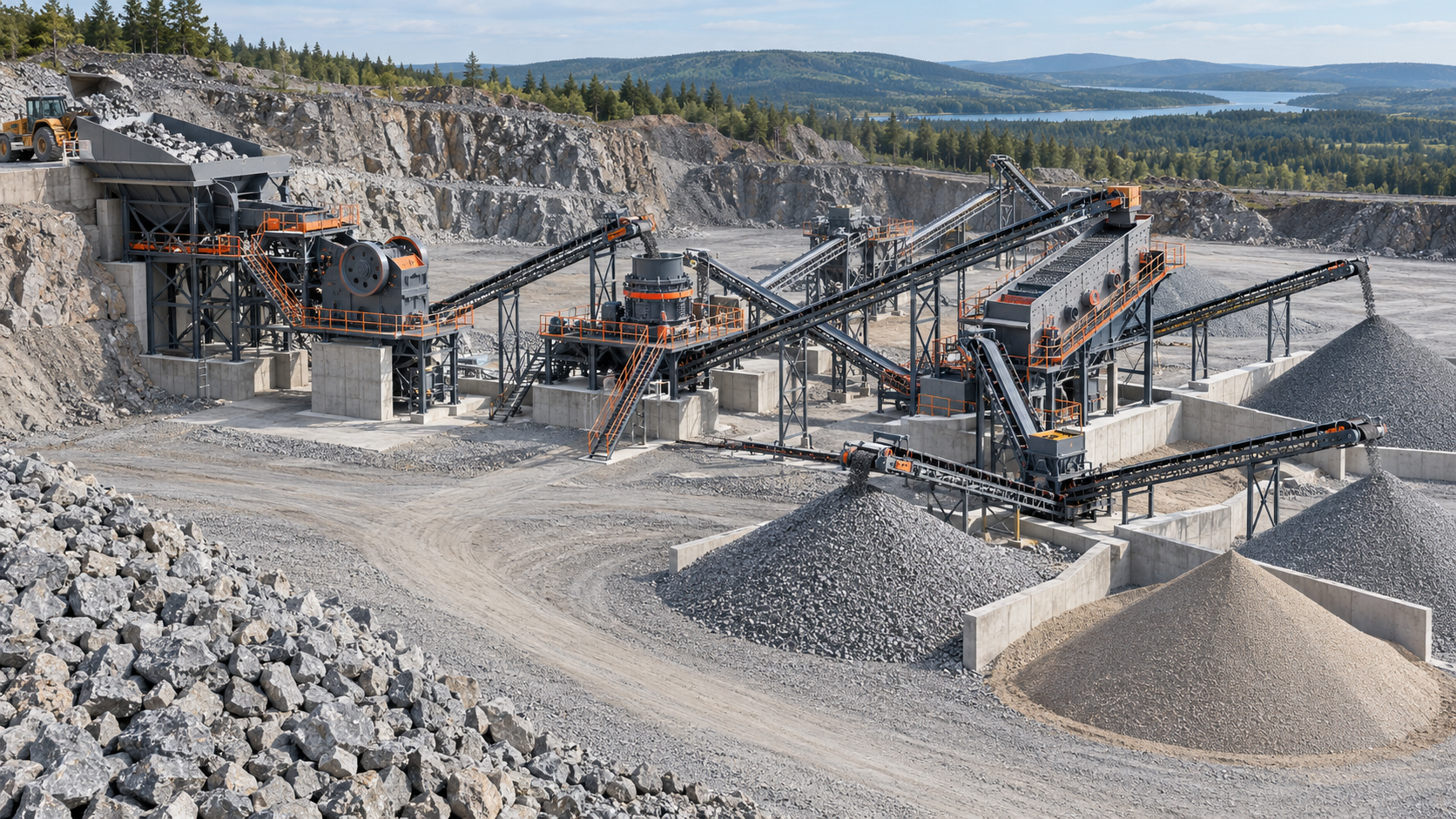
A typical discussion may include feeding and scalping, primary crushing, secondary or tertiary crushing, screening, recirculation, sand shaping, washing and stockpiling. Not every project needs every stage. Each stage should solve a defined duty.
Site and Utility Constraints
Provide the available footprint, elevation changes, geotechnical limits, power supply, water availability, drainage, climate and access roads. These conditions influence equipment arrangement, conveyor lengths, dust control and civil work.
Stationary or Mobile?
Stationary plants are commonly considered for long-term production and integrated stockpiling. Mobile crushing and screening can support contracting, temporary sites or changing work faces. The choice should consider relocation frequency, feed method, product requirements and total operating cost.
Questions Before Requesting a Quotation
- What enters the plant, and at what maximum size?
- What products must leave the plant?
- Is the stated capacity feed rate or finished-product output?
- How much recirculating material is expected?
- What utilities and installation space are available?
- Which items are included in the supplier scope?
A clear project brief allows suppliers to compare solutions on the same basis. HNLANGBO can review your material, capacity, final sizes and site conditions before discussing a preliminary process configuration. Send your project inputs here.
Technical Decision Table
| Input group | Information to confirm | Design impact |
|---|---|---|
| Feed | Material, top size, grading, moisture, clay and density | Crusher, feeder and screen duty |
| Production | Normal and peak capacity, hours and availability | Equipment sizing and redundancy |
| Products | Sizes, grading, shape, moisture and use | Circuit stages and recirculation |
| Site | Layout, elevation, climate, access, power and water | Plant format and auxiliary systems |
Final equipment selection should be based on confirmed material data, site conditions and the agreed technical scope.
Frequently Asked Questions
Why is capacity alone insufficient?
The same output target can require different equipment when feed and product requirements change.
When should a mobile plant be considered?
Mobile equipment can suit temporary sites, changing work faces or limited civil works.
How should proposals be compared?
Use the same feed assumptions, product targets, scope, installed power, wear basis and exclusions.
Discuss Your Project Requirements
Send the material, feed size, target capacity, required products and site information for a practical equipment review.
Request a Project Proposal