
Planning a Manufactured-Sand Production Line
- Begin with required sand grading and intended use.
- Describe source material, feed grading, moisture and clay.
- Confirm shaping, classification, washing and water recovery needs.
- Compare complete process scope against the same feed basis.
HNLANGBO buyer resources · Updated 20 September 2026
Preparing a sand-production enquiry starts with the product you need to sell. Send the required grading, feed information and site constraints together so that the proposed equipment and supply scope can be reviewed against the same brief.
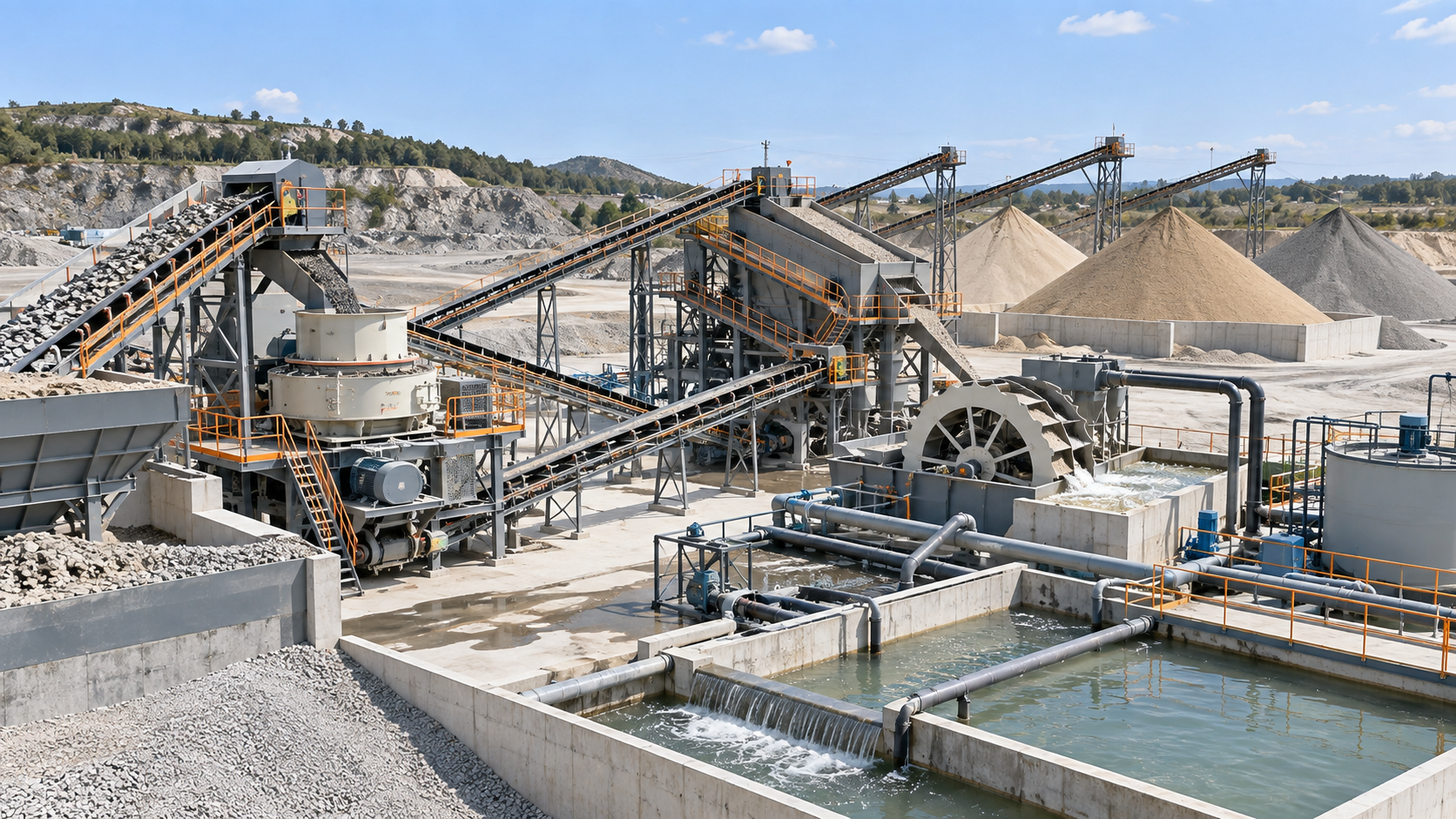
1. Define your saleable product
Share the intended application, required particle-size distribution and the acceptance specification used by your customer. Include any stated limits for fines, moisture or particle shape. Attach a specification or sieve-analysis report if available; identify any values that are still undecided.
2. Describe the incoming material
Provide the rock type, maximum feed size, typical feed grading and available moisture or material-test information. Tell us whether the feed comes from an existing crushing circuit or directly from a quarry. Photos help explain the material, but do not replace measurements or representative test results.
3. Separate feed rate from finished output
State whether your requested tonnes per hour refer to incoming feed or finished sand. Also provide working hours, the required aggregate co-products and any existing equipment that must remain in the line. Ask each supplier to identify the assumptions behind its proposed capacity.
4. Explain site and utility constraints
Include a site sketch, available power, water availability, drainage constraints, access and stockpile space. Ask the supplier to explain the proposed classification and any washing arrangement, including the equipment and utility responsibilities included in the quotation.
5. Compare the complete supply scope
Check whether feeders, conveyors, screens, control systems, structures, installation guidance, wear parts and delivery documents are included. Record exclusions and the responsibilities for civil work and utilities. Compare proposals using the same product specification and operating assumptions.
Copy this enquiry checklist
- Country, project location and project stage
- Feed material, maximum size and available test reports
- Feed rate and required finished-product output, stated separately
- Sand grading, acceptance limits and required co-products
- Power, water, site layout and existing equipment
- Requested supply scope, support and delivery destination
Explore sand-making and washing equipment · Review the sand-production application
Ready to discuss your line? Send your enquiry, or email drawings and specifications to sales@langbomachine.com. This checklist helps prepare a proposal; the final configuration and performance basis must be agreed for your project.
Technical Decision Table
| Planning item | Questions to answer | Process effect |
|---|---|---|
| Product target | Grading, fines, shape, moisture and use | Screening, classification and shaping |
| Source material | Rock, abrasiveness, top size, moisture and clay | Crushing route and wear basis |
| Water system | Availability, discharge and recovery | Washing, recycling and sludge handling |
| Quality control | Sampling and adjustment method | Stable finished-sand specification |
Final equipment selection should be based on confirmed material data, site conditions and the agreed technical scope.
Frequently Asked Questions
Is washing always required?
No. Dry classification or washing depends on feed, fines, water availability and product specification.
Why separate feed rate from finished output?
Losses, recirculation, moisture removal and oversize rejection change usable output.
When is VSI shaping needed?
It depends on particle-shape targets, upstream crusher product and acceptable wear cost.
Discuss Your Project Requirements
Send the material, feed size, target capacity, required products and site information for a practical equipment review.
Request a Project Proposal